
The storage clock: a small structural difference, and who it serves
Normal goods have a published 100-day free-storage period; abnormal parcels use a separate 60-day clock. Check each order’s actual status and deadline before waiting for more items.
Checked against official pages captured 2026-10-10 · page reviewed 2026-10-16
The 100-day clock
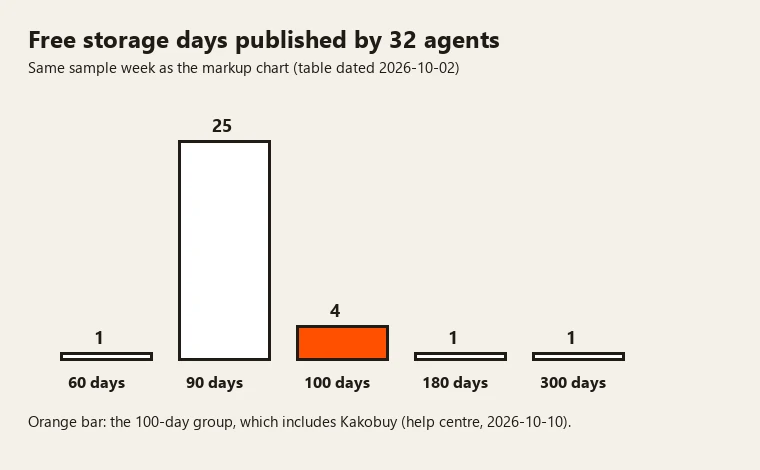
Help article 1 sets the normal storage period at 100 days, about three months, starting from the order status “in storage”. After 90 days Kakobuy emails a reminder to submit the parcel. Abnormal packages get 60 days, counted from “Signed for”. Items past the period are treated as abandoned and destroyed, and perishables carry their own one-month shelf limit.
In the October 2026 sample of 32 agents, 25 published 90 days and four, Kakobuy among them, published 100. A couple publish longer periods. So the clock is a real structural difference, but a modest one.
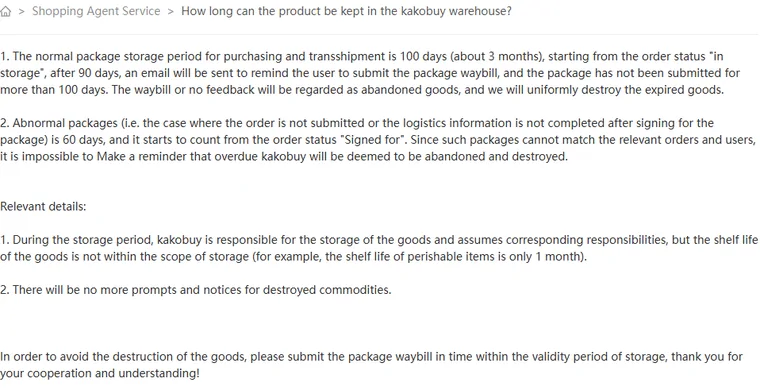
Where ten extra days matter
A 90-day versus 100-day comparison matters only when an eligible normal order would otherwise wait beyond day 90. It is not a reason to delay an order with an earlier return deadline or an unresolved warehouse issue. Decide whether the later item is worth waiting for after checking the oldest stored item.
If your items leave well within either storage period, compare the more relevant conditions: return eligibility, route acceptance and final packed cost. Extra nominal storage days do not compensate for a missed seller-return window.
What a longer promotional figure means
Kakobuy's promotion page advertises a longer free storage period than the help centre does. The help article gives the more conservative planning basis, and it is the one Kakobuy's own tutorial repeats (“100 days free storage service”). Plan around 100 days.
When marketing and policy disagree, ask support which rule applies to your order. Keep a screenshot of the help article with its date if your plan depends on the clock.
Extensions and the cooling-off period
The 10 October capture of article 120 lists ¥10 per OG order for a 30-day extension and describes a separate cooling-off stage. That is not an automatic extra free month. Check eligibility and the displayed expiry before applying, then save the confirmation and new deadline; do not rely on an assumed processing time.
The price changed during 2026: a June copy of the same article listed 20 yuan per order per 100 days. The October capture is newer; confirm the extension price in your account before relying on it. Extensions are per order, so ten small orders waiting cost ten times as much to extend as one combined order.
What happens at the end of the clock
Article 1 warns that expired goods may be treated as abandoned and destroyed. Article 120’s extension/cooling-off language does not remove that risk or establish automatic eligibility for every expired order. If the account deadline is unclear, contact support before expiry rather than using the reminder email as your only calendar.
Three habits keep the clock harmless. Note the “in storage” date of the first item in a planned haul, because that item's clock runs out first. Ship the oldest items with the next parcel if the haul is not complete. And treat abnormal packages, such as wrong items waiting for a return, as a 60-day problem rather than a 100-day one.
Free consolidation: check the final parcel cost
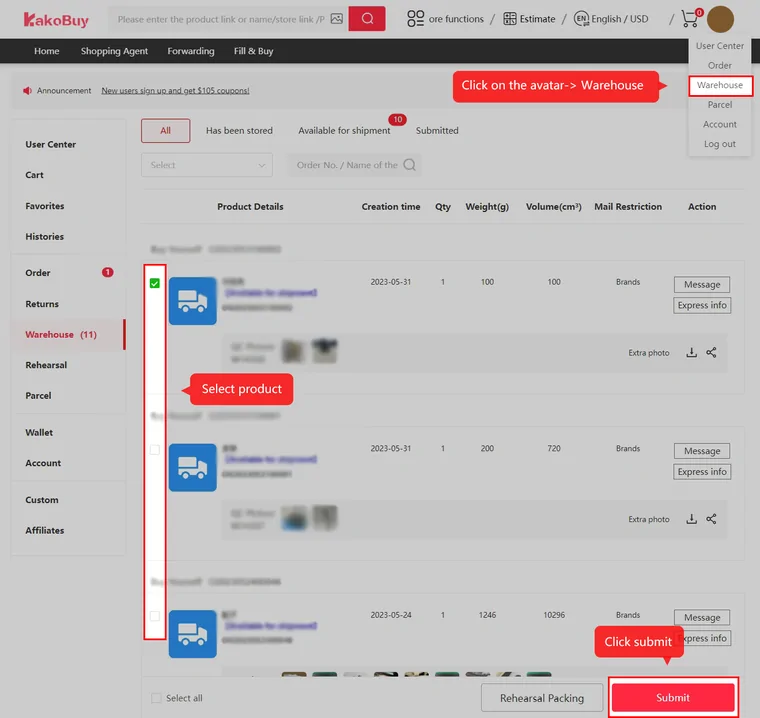
Kakobuy’s captured help page lists free consolidation. Its EMS example illustrates how combining parcels can avoid repeating a first-weight charge, but those old rates do not establish today’s saving. The combined parcel may move into a different dimensional-weight bracket or lose eligibility for the route you wanted.
Check the selected route’s actual maximum weight, dimensions, contents and quantity restrictions. An old help-page warning about large or repeated-item shipments is not a universal customs safe limit. Compare the combined quote with the eligible split quotes before submitting.
Use the earliest deadline in the haul
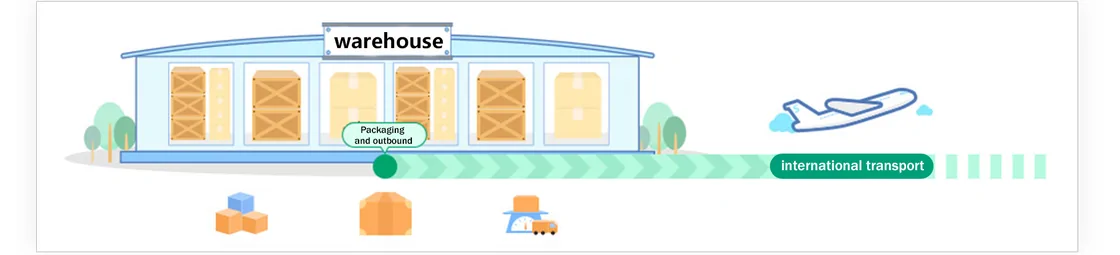
Orders do not share one clock just because you plan to pack them together. Record each order’s stock-in status and displayed deadline, then use the oldest item to decide when to ship. Article 1 warns about abandoned goods after expiry, while article 120 describes a cooling-off stage and extension service. Do not treat that combination as a guaranteed extra month of free storage: ask support which deadline applies to the specific order and arrange any extension before relying on it. Read the extension service.
Three arrivals do not create one new storage clock
Suppose a jacket has been stored for weeks, shoes arrive today and a third item is still with its seller. Packing them together later does not reset the jacket’s storage date. Write down each OG number, status, deadline and any open return request; the oldest deadline controls the waiting decision.
If the third item has no reliable dispatch confirmation, compare sending the ready items now with the known extension cost and the uncertain later parcel cost. Check route limits for each packing plan. A storage saving is not useful if waiting closes the return window or produces an ineligible parcel.